Brown Spring Coppice – to plant, or not to plant?
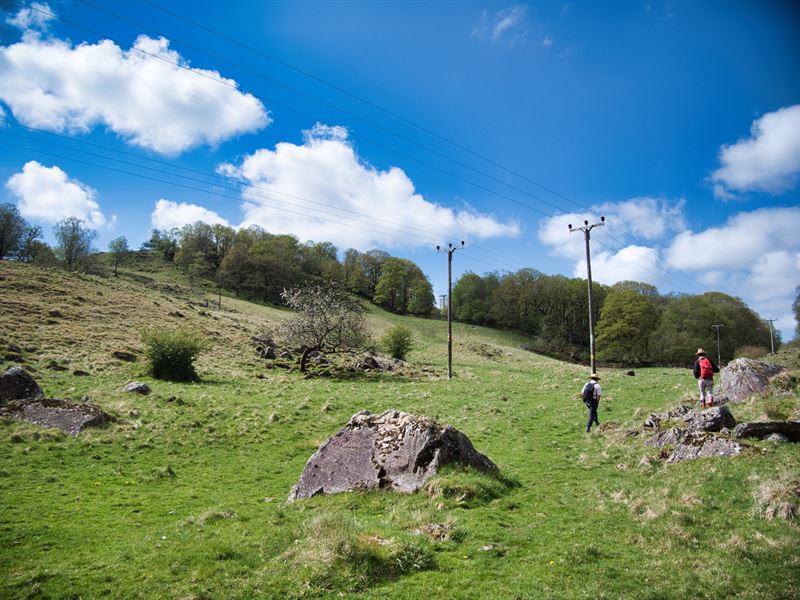
Brown Spring Coppice, near Ings, is a 13.86-hectare field of what first appears to be rough grazing, with a few trees scattered around. Bounded to the west by five hectares of some ancient semi natural woodland and further grazing fields to the north of the railway.
Historically, this was a coppice (hence the name), but it was felled in the 1950s, with the better form of trees harvested. It was farmed ‘traditionally’ from the 1980s onwards before being taken ‘in hand’ by the current owner in the 2020s and is now grazed and managed by a grazier with only a handful of cows put out in the field. When we visited, there were 2, but sometimes more.
While it’s obvious that this field is not a woodland, there are clues, some more obvious than others, that suggest this was once woodland. Brown Spring Coppice gives us a great example of what can be described as Ghost Woodland, and as such, throws up several questions and possibilities about how this land could be managed, how trees have been a part of the land's history, and what this means for future decisions.
What is a Ghost Woodland?
Ghost woods are fragments or remains of what were once woods. Evidence of this is from indicator species which still persist even though the trees may have all but gone. Just as with PAWS, there can be a wealth of evidence that the land was once ancient woodland, such as its name, archaeology, ground flora etc.
Ghost woods provide an opportunity to reestablish woodland with minimal intervention. When looking at opportunities for Ancient Woodland restoration, these sites may have features that are just as important as PAWS (plantations on ancient woodland sites)
With some changes to grazing and or browsing control, there is potential for these ghost woodlands to come back from the ‘dead’ with minimal intervention and return to a woodland of some form.
The Ghost Wood of Brown Spring Coppice
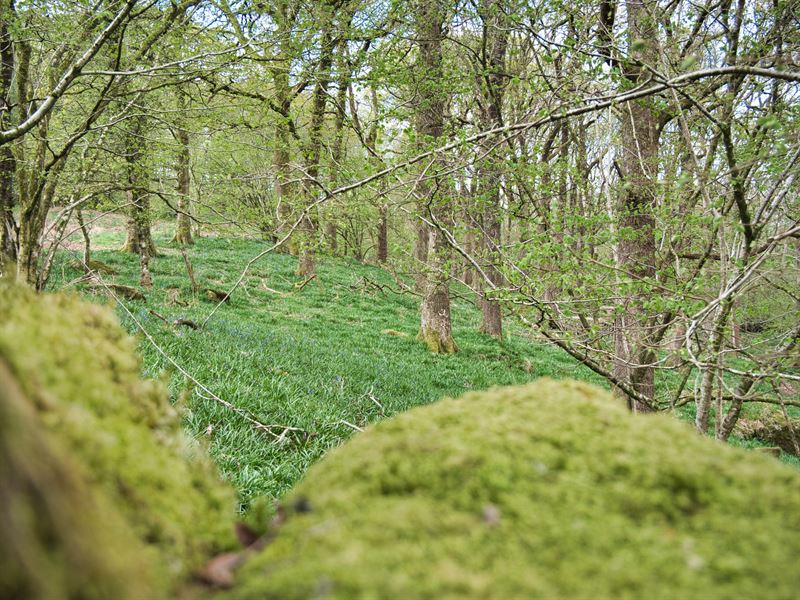
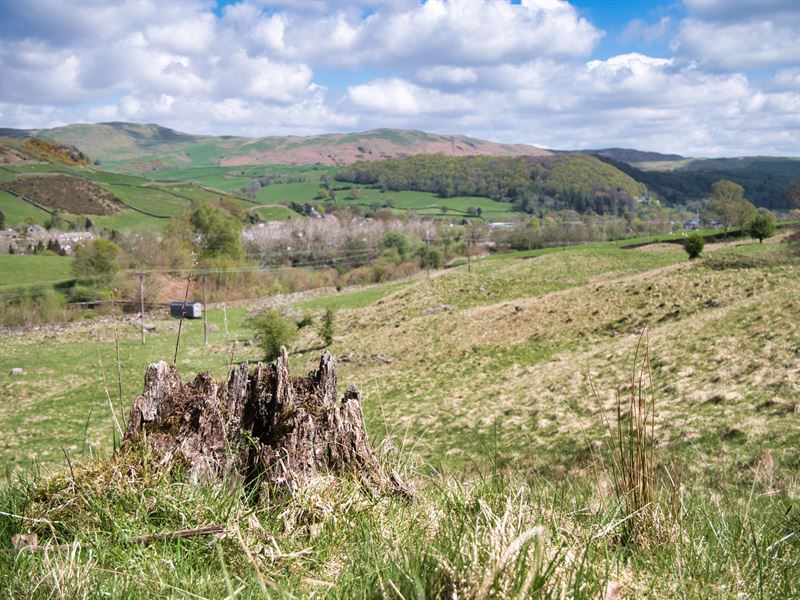
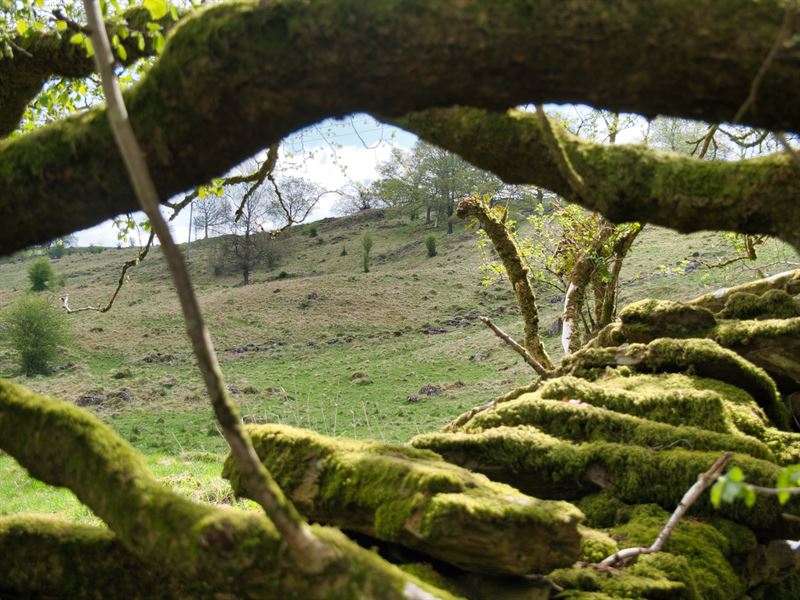
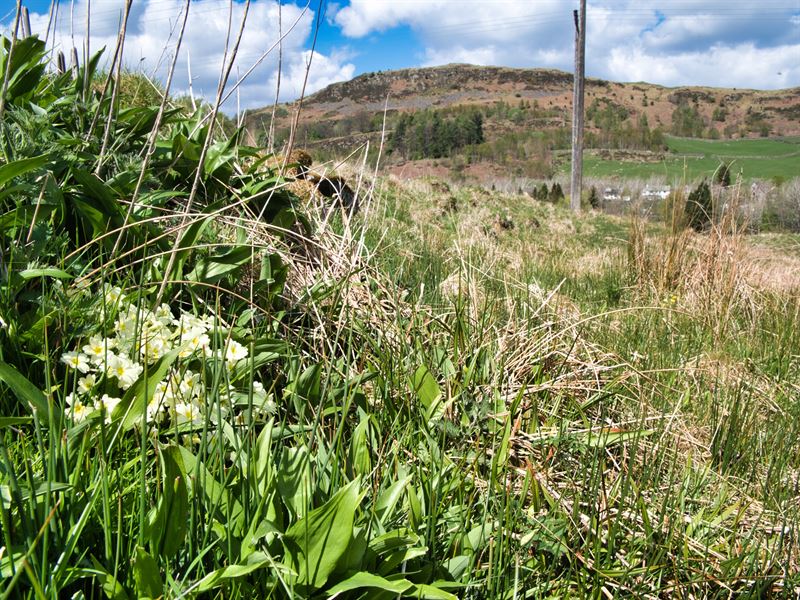
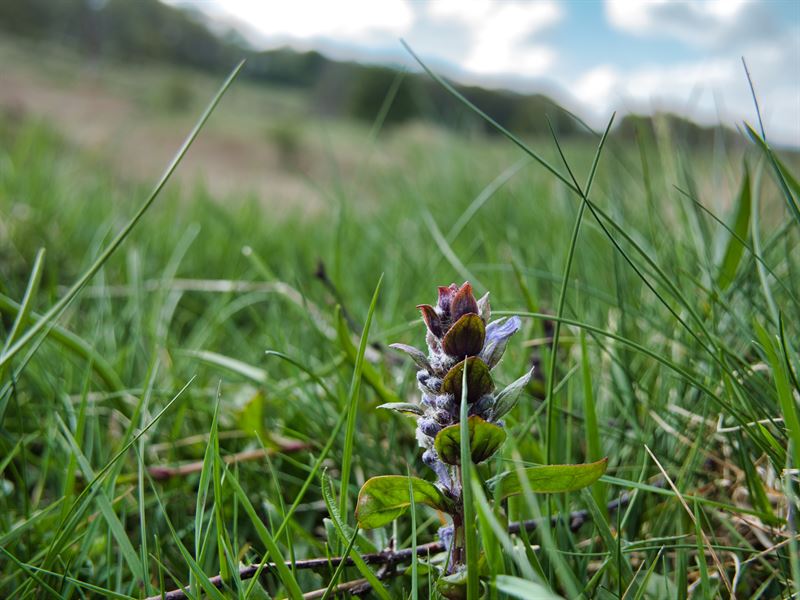
Being called coppice is a pretty good start for understanding that this area was once a coppice. Our trip to the site also yielded numerous indicators such as old trees, oak stumps, and ground flora, including:
- Wood Anemone,
- Valarian,
- Common Dog violet
- Ransom,
- Dogs' mercury
- Primrose
- Bilberry
A quick survey of the adjacent woodland shows a similar array of indicator species, suggesting ancient woodland. The site offers a variety of terrain, including wet/boggy areas, steeper wooded areas, and grassland. From an ecological point of view, any of these aspects could be developed to create improved habitats and environmental benefits. This turns up big questions about the land... Does simply being identified as ghost wood mean its fate is sealed? Should it be returned to woodland, or is the grassland more valuable?
What does this mean for (Ghost) Woodland Management?
The initial reaction from a forestry perspective is to plant some trees, particularly where there are bluebells/bracken. However, the key in this situation is to think in “tree time” - the woodland was once coppice and had historically had sufficient trees to harvest the oaks. However, there are indicators of wood pasture, such as the hawthorn and crab apple.
The owner is keen to continue with the current grazing regime, but this may still hinder any natural regeneration. There are self-seeded seedlings within the area, yet no trees have been able to establish to date, even with this low grazing regime. While there is still a definite browse line, there is evidence that the hawthorns are developing “skirts” rather than “waists”, in that they are managing to grow into what would formerly have been sheep grazing height.
Deer offer another challenge which will prevent or seriously hamper any natural regeneration efforts and must be considered alongside any other future interventions.
The decision making on this site is difficult as the grassland habitat here is important and must be valued alongside the desire for more trees. There are significant species-rich acid grassland components to the land which would be lost if grazing were removed. With this habitat being rarer in the local area than woodland and scrub, this needs to have a bearing on the decision-making process.
Management objectives are key and obviously lie with the landowner. There are diverse grassland species as well as Ancient Woodland Indicators, so it is a choice to a point, although any woodland creation would need to be sensitive. It would be good to buffer the ancient woodland, but sensitive management of the grassland is a form of buffering.
What does the future hold?
For Brown Spring Coppice, the current plan is to keep on grazing low numbers and see how the land responds, particularly with grassland species and natural regeneration of any trees. Essentially, this is a site that offers multiple possibilities depending on management objectives.
Other options include planting, which could be in the form of exclosures, or using cactus guards to protect trees from grazing. By citing these adjacent to the existing ASNW to the north, and some nearer the water courses, this would enhance the existing wood pasture with minimal impact on the grassland.
For Ghost Woods in general, it’s a useful term to think of and imagine past land use and what that might mean for future woodland (re)creation or restoration. Just as PAWS are valuable for restoration, Ghost woods also offer this potential to recreate past woodlands.
---
The Case Study was produced as part of our ongoing work with the Woodland Trust to carry out ancient woodland restoration outreach work with owners and managers of woodland in Cumbria. Find out more HERE