Thornthwaite Farm
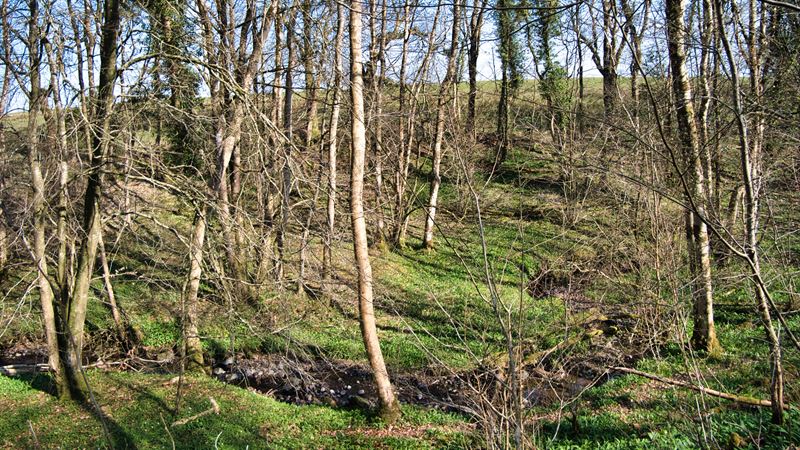
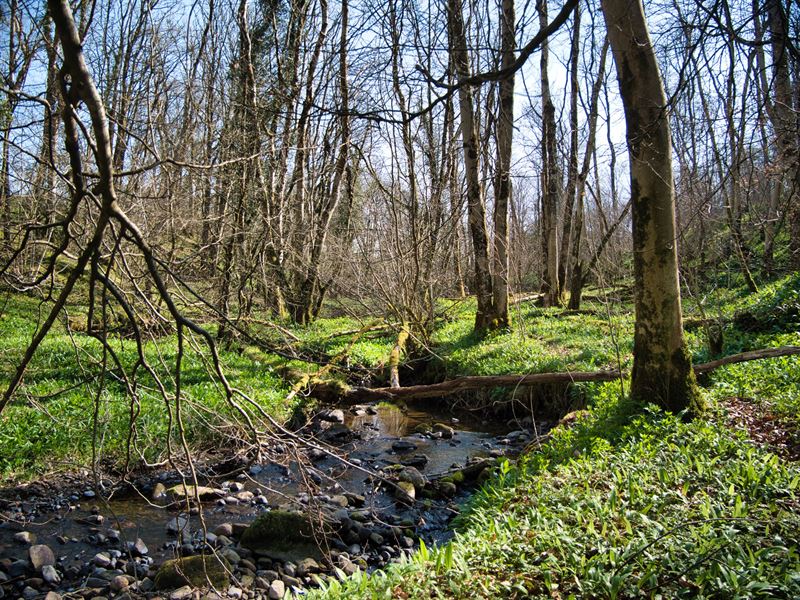
Thornthwaite Hall is a small holding of approximately seven hectares near Wigton in the North West of Cumbria. The land is mostly grazed by sheep, but includes three hectares of generally steep sided riparian ancient woodland, which is in good condition and very flora-rich.
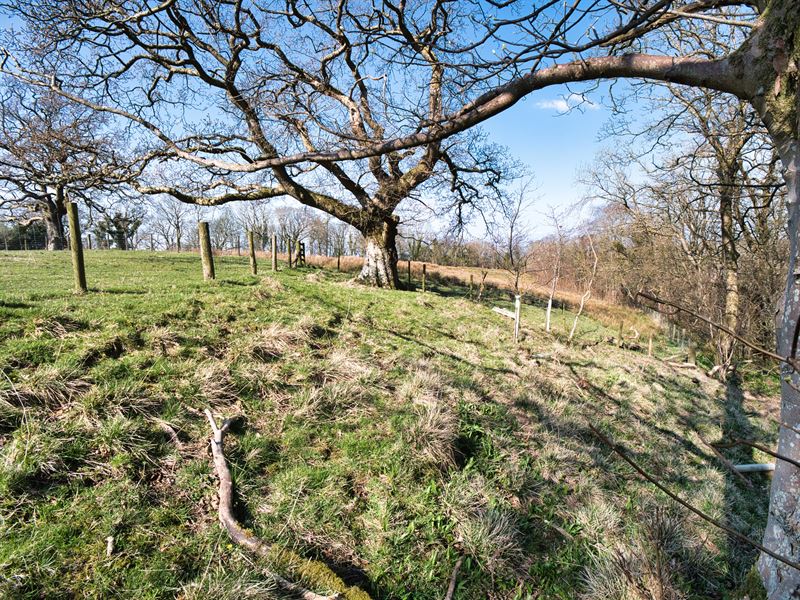
Jamie visited this spot ten years ago and noted that an area of woodland that protruded into an area of grazing had been recently fenced off. He was keen to return and see what impact had been made by fencing off a small area of the woodland, which had historically been grazed.
The map from a survey in 2010 shows the extent of the woodland that extended out into the field. The report also described the area as dominated by grasses, some nettles, but “may again support bluebells and ramsons”.
This patch of woodland would have offered shelter to the stock and made moving around the field easier, but also provided an opportunity to improve the ecology of the woodland by simply putting in a fence and giving it some time.
This site gives the opportunity to observe the interaction of a riparian ancient woodland that is in 'good' health along side an area of woodland that is recovering due to fencing and exclusion 15 years ago.

What’s changed?
This year (2025), we had the opportunity to go back and observe what impact this reduction in grazing would have on this area.
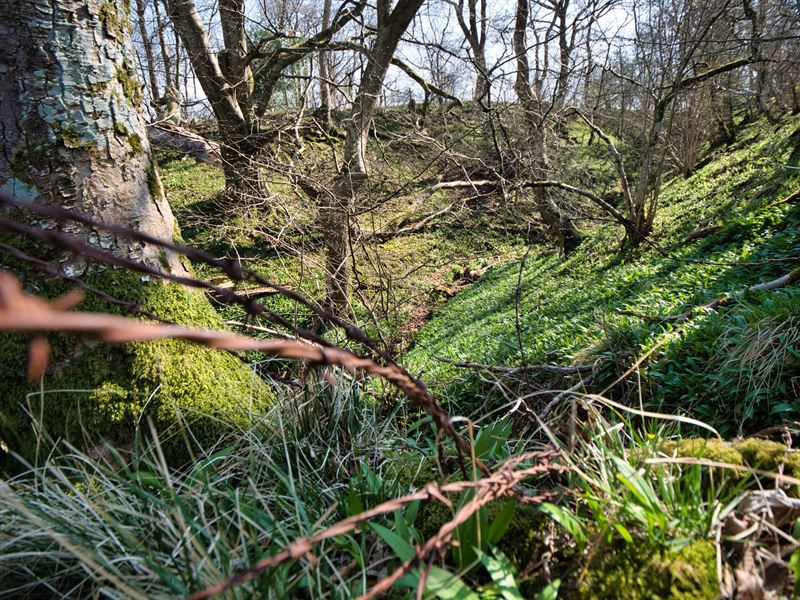
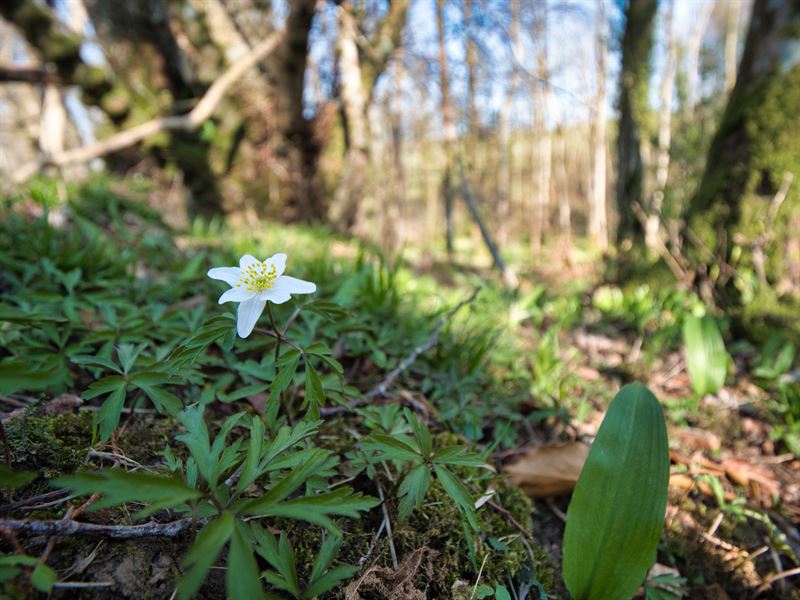
With the historic grazing, the flora was rare in this area, but could still be found in the existing neighboring woodland. Flora will likely have remained close to the stream and clung on where sheep struggled to get access. With the removal of the grazing pressure, the flora has started to migrate outwards slowly from the stream towards the fence line. Closest to the stream, or the adjoining woodland, we see the largest numbers of flora, gradually reducing in species variety and density toward the fence. We can now see the expansion of flora species from the well-established riparian woodland below, up into this more recently fenced area. On this visit, we noted Lesser celendine, Wood anemone, ransoms, and dogs mercury.
We see this progressing by observing a density and variety of plant species lower down in the woods, which becomes less dense and less diverse as we move closer to the fence line. The hopeful prediction is that it will 'fill out' to the new boundary in the future, as there are still trees and cover up to the fence line. We can also see this on the previous field boundary with the existing woodland flora coming right up to the old fence. It's likely this will eventually look the same with a stark change from woodland flora to grazing.
This small example shows how buffering and offering more space to existing woodlands or trees, along with removing grazing pressure, allows them to respond, adapt, and expand into new or existing areas. For the cost of some fencing and some loss of some grazing land, the ecological benefits can be many. In this example, the stream and wooded area doesn't represent prime grazing and is potentially a hazard for sheep, so this works well. The decision-making and motivation for these sorts of interventions will vary, but the result would be similar. Of course, there is risk, the land might just fill with bracken, but here it has worked out well for the woodland.
In this case, it was important to identify the potential of the land and then give it time and space to fill out. With the stream and steep banks, flora has been able to ‘cling on’ even under grazing, and along with the connection to the healthy woodland next to it has allowed it to recover quickly.
Is it all about the fence?
The fencing does appear to have had a dramatic impact on this small patch of woods. Thinking about this patch of land without a fence for the last 15 years, we can imagine some different outcomes for the area, but they are not wildly different.
In the medium term, it would be similar. Currently, we have a good understorey with hazel and a bit of hawthorn here and there. The canopy is mainly ash and sycamore, but enough sycamore to cover if ash is lost, and as there is no public access to the land, the ash can be left to decline with dieback. There is also lots of deadwood and standing deadwood, so there is a really good example of biodiversity and habitat and long-term potential for that. There is also a big oak tree that could mature towards veteran status.
Even long-term without the fence is not all bad, it's more than some slight tweaks to management have made it even better by giving the flora more space, and the long-term habitat potential is greater.
Conclusions
This example has proved that fencing has massive benefits for flora, and if it were unfenced and grazed entirely, the woodland would be in poorer condition. Ancient woodlands need buffering and space, which allows the woodland to expand. This is an easy win just by giving space.
The Case Study was produced as part of our ongoing work with the Woodland Trust to carry out ancient woodland restoration outreach work with owners and managers of woodland in Cumbria. Find out more HERE